How to Get Your Brand Cited in ChatGPT (2025 Guide)
How to Get Your Brand Cited in ChatGPT
Learn proven strategies to get your brand cited in ChatGPT and AI systems. Complete guide covering content strategy, authority building, and AEO tactics that work.
ChatGPT has changed how people find information. Instead of scrolling through search results, users get direct answers. If your brand isn't part of those answers, you're invisible to millions of potential customers.
This guide shows you how to position your brand so ChatGPT mentions it when answering relevant questions. No gimmicks. Just practical strategies that work.
Why ChatGPT Citations Matter for Your Brand
When ChatGPT cites your brand, something important happens. You gain visibility without competing for ad space or search rankings. People trust AI-generated responses, and that trust transfers to the brands mentioned.
Think about traditional SEO. You optimize for Google, hoping to rank on page one. But with AI, the game is different. There is no page one. ChatGPT either mentions you or it doesn't.
The shift matters because AI tools are becoming the default research method. Students, professionals, and decision-makers ask ChatGPT for recommendations. If your brand shows up in those conversations, you're reaching people at the exact moment they need information.
And here's the thing—early movers have an advantage. The brands establishing authority now will benefit as AI becomes more embedded in daily searches.
How ChatGPT Actually Sources Information
Understanding how ChatGPT works helps you create a better strategy. The system doesn't browse the internet in real-time for every answer (though newer versions can). Instead, it relies on patterns learned during training.
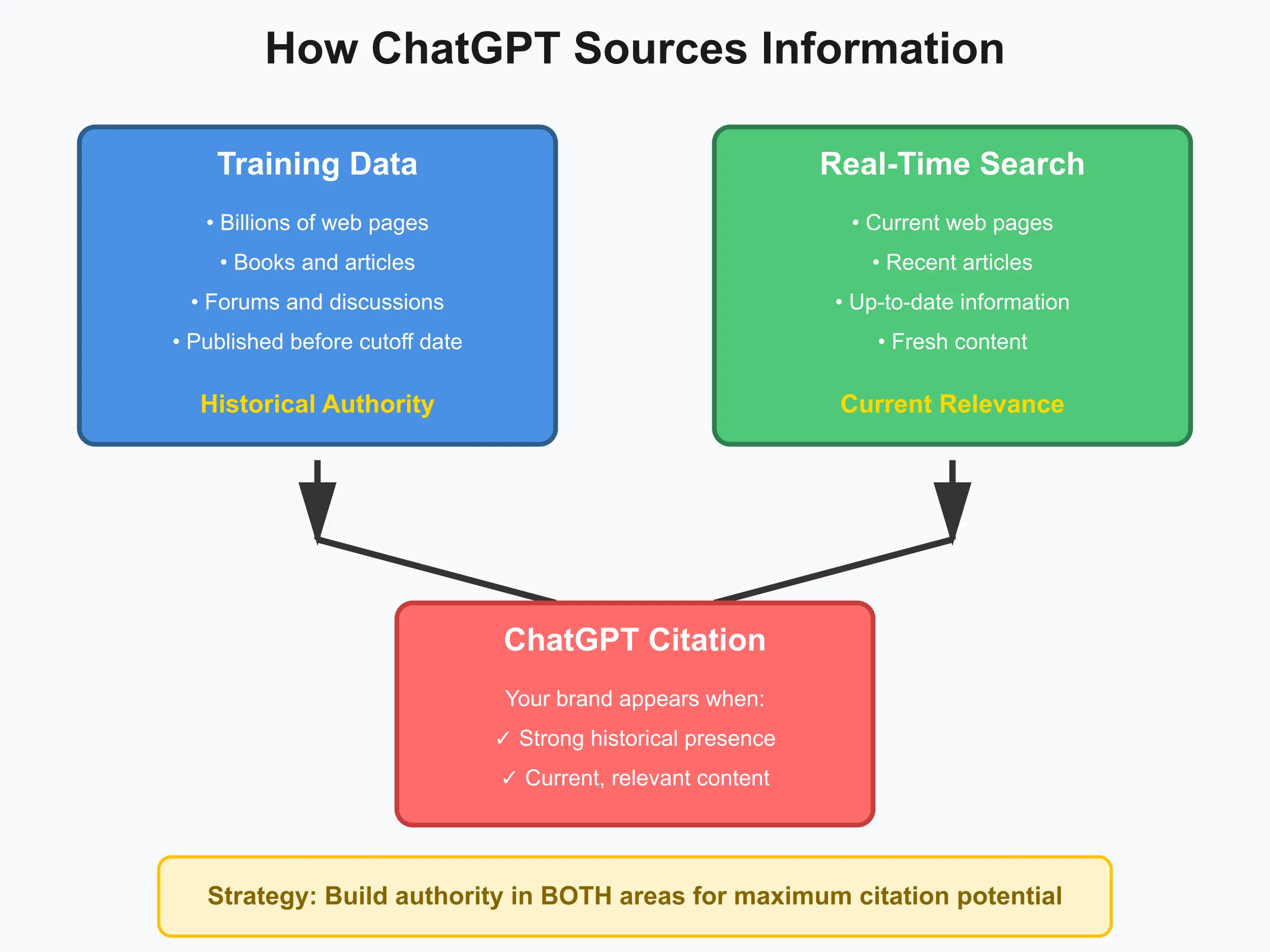
ChatGPT's training data includes billions of web pages, books, articles, and forums. The AI learned which brands appear in specific contexts. If your brand appears frequently in high-quality content about a topic, ChatGPT is more likely to mention it.
But there's a catch. Training data has a cutoff date. Information beyond that date doesn't exist in the base model. That's why the AI can describe historical brands perfectly but might miss newer companies.
Recent versions added web search capabilities. When users ask about current information, the system can search and cite real-time sources. This opens new opportunities for brands creating fresh, relevant content.
The key takeaway? You need both. Build authority in existing content (for training data inclusion) and maintain active, current content (for real-time citations).
Build a Strong Online Presence
Your brand's online footprint determines whether AI systems notice you. Strong presence means appearing consistently across multiple reputable platforms.
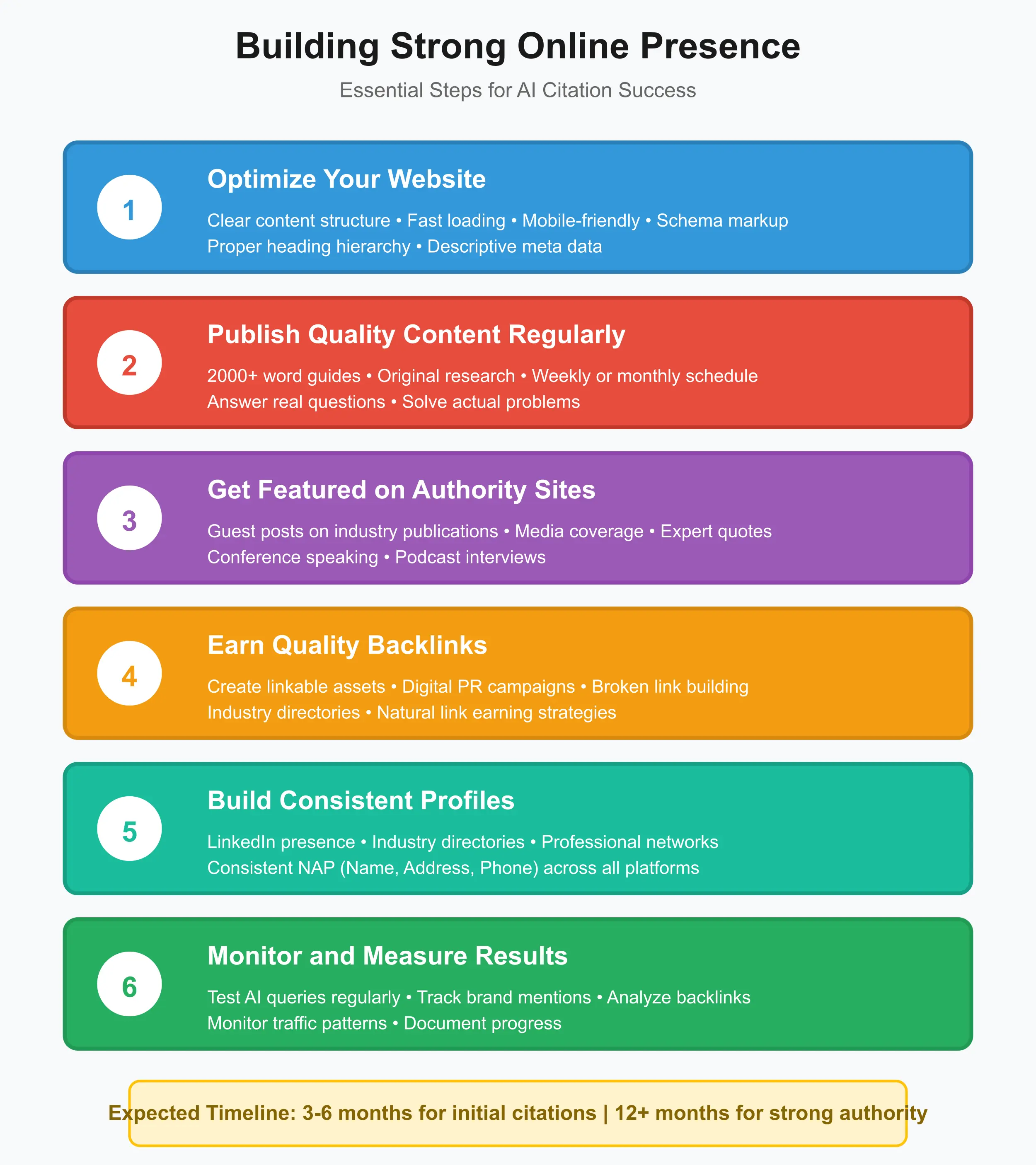
Start with your website. It needs clear, well-organized content that explains what you do. Many brands assume their "About" page is enough. It's not. You need dedicated pages for your main services, products, and expertise areas.
Blog regularly. Weekly posts are ideal, but monthly works if each article provides real value. Focus on topics your audience actually searches for. Answer questions. Solve problems. Share insights you've gained from experience.
Get featured on authoritative websites in your industry. Guest articles on respected publications carry more weight than self-published content. One mention in a major industry site can outweigh dozens of blog posts on your own domain.
Build profiles on relevant platforms. LinkedIn, industry-specific directories, and professional networks all contribute to your digital footprint. Keep information consistent across all profiles. Inconsistent details confuse AI systems and dilute your authority.
Create Citation-Worthy Content
Not all content gets cited equally. AI systems favor certain types of information when generating responses.
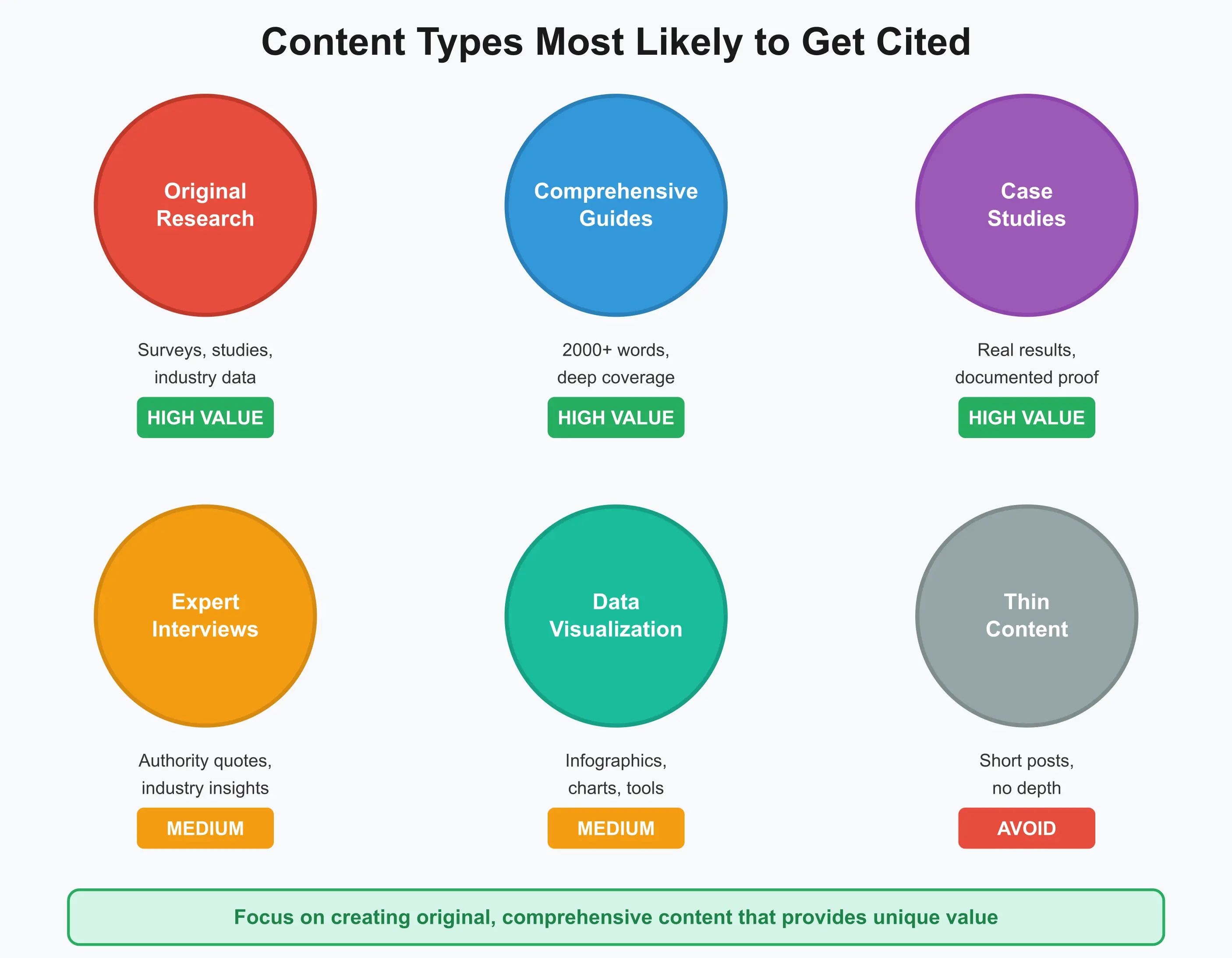
Original research tops the list. Conduct surveys, analyze industry data, or publish case studies. When you're the source of unique information, other sites link to you. Those links and mentions signal authority to AI training systems.
Comprehensive guides work well. Long-form content that thoroughly covers a topic becomes a reference point. If someone asks ChatGPT about your industry, detailed guides increase the chances of citation.
Expert interviews and quotes add credibility. Feature recognized professionals in your content. Their authority transfers to your brand. And when they share your content, you reach new audiences.
Data visualization makes complex information accessible. Create infographics, charts, or interactive tools that others can reference. Visual content gets shared widely, increasing your brand's visibility.
Case studies demonstrate real results. Document how your product or service solved specific problems. Include metrics, timelines, and outcomes. This type of evidence-based content carries significant weight.
Write for humans first, AI second. Trying too hard to "optimize for AI" usually backfires. Focus on creating genuinely helpful content. The citations will follow.
Optimize Your Website Structure
Technical factors influence how AI systems interpret your content. A well-structured site helps AI understand what your brand does and why it matters.
Use clear heading hierarchies. Your H1 should state your main topic. H2 tags break content into major sections. H3 tags handle subtopics. This structure helps AI parse your content logically.
Implement schema markup. This structured data tells search engines (and AI systems) exactly what information your pages contain. Mark up your business details, products, reviews, and articles. Tools like Schema.org provide templates.
Create a logical site architecture. Related content should link together naturally. If you write about marketing automation, link to your articles on email campaigns, CRM integration, and analytics. These internal connections help AI understand topic relationships.
Maintain fast load times. While speed doesn't directly affect citations, slow sites get crawled less frequently. Less crawling means your new content takes longer to reach AI training datasets.
Ensure mobile responsiveness. Most training data comes from modern web pages designed for multiple devices. A mobile-friendly site signals current, maintained content.
Write descriptive meta titles and descriptions. These summaries often influence how AI systems categorize your content. Include your brand name and primary keywords naturally.
Earn Quality Backlinks
Links remain one of the strongest signals of authority. When reputable sites link to yours, AI systems notice.
Focus on earning links, not buying them. Paid link schemes get detected and devalued. Instead, create content worth linking to. Research that others cite, tools that solve problems, or insights that spark discussion.
Guest posting on industry sites builds links and visibility. But don't spam low-quality blogs. One article on a respected publication beats ten posts on mediocre sites.
Broken link building works surprisingly well. Find dead links on authoritative sites in your niche. Contact the site owner and suggest your content as a replacement. You're helping them fix their site while gaining a quality link.
Digital PR generates natural links. When you launch something newsworthy—a study, tool, or initiative—pitch it to journalists. Media coverage creates high-authority links that significantly boost your brand's perceived expertise.
Competitor analysis reveals opportunities. See where your competitors get links. Can you create better content on those topics? Reach out to the same sites with improved resources.
Participate in industry directories and associations. These links might not drive much traffic, but they establish your brand within your field. AI systems recognize these contextual signals.
Establish Thought Leadership
Becoming a recognized voice in your industry increases the likelihood of AI citations. Thought leaders get mentioned when people discuss industry topics.
Publish on LinkedIn regularly. The platform has massive reach and high domain authority. Articles published there often appear in training datasets. Share insights, comment on industry trends, and engage with other professionals' content.
Speak at industry events. Conference presentations establish expertise. Event websites list speakers and topics, creating another citation opportunity. Record your presentations and publish them—video content contributes to your overall digital presence.
Write for industry publications. Most sectors have online magazines or blogs that accept expert contributions. Getting bylined articles on these sites positions you as an authority.
Start a podcast or video series. Audio and video content is increasingly transcribed and analyzed by AI systems. While ChatGPT can't watch videos directly, transcripts and descriptions become part of your citable content.
Engage in industry discussions on Reddit, Quora, and specialized forums. Thoughtful, helpful answers on these platforms contribute to your expertise signal. Just make sure you're genuinely helping, not just promoting.
Publish a book. Even a short ebook establishes credibility. Books get cited frequently because they represent comprehensive expertise on a subject.
Leverage Public Relations
Media mentions significantly boost your chances of AI citation. News articles carry high authority in training datasets.
Issue press releases for genuine news. New products, partnerships, research findings, or company milestones warrant announcements. Distribute through reputable wire services like PR Newswire or Business Wire.
Build relationships with journalists. Follow reporters who cover your industry. Engage with their work. Offer yourself as a source for future stories. When journalists need expert quotes, being accessible matters.
Respond to reporter queries on platforms like HARO (Help a Reporter Out). Journalists post requests for expert sources. Your responses can lead to mentions in major publications.
Create newsworthy content. Original research, trend reports, or controversial opinions generate coverage. The goal isn't just any press—you want coverage that demonstrates expertise.
Monitor brand mentions. Set up Google Alerts for your brand name. When unlinked mentions appear, politely ask for a link. These mentions already acknowledge you; adding a link strengthens the signal.
Handle negative press proactively. If criticism appears, respond professionally with facts. How you handle challenges influences your brand's overall perception in training data.
Monitor and Measure Results
You can't improve what you don't measure. Track whether your brand appears in AI responses.
Test queries regularly. Ask ChatGPT questions your potential customers might ask. Does your brand appear in responses? Try different phrasings. Note which queries mention you and which don't.
Use multiple AI tools. ChatGPT isn't the only player. Test your brand visibility in Claude, Perplexity, and other AI systems. Each has different training data and retrieval methods.
Track web mentions. Tools like Ahrefs, SEMrush, or Google Search Console show where your brand gets mentioned online. Increasing mentions correlate with better AI visibility.
Monitor backlink growth. New quality backlinks signal growing authority. Track both quantity and quality. Ten links from authoritative sites matter more than a hundred from unknown blogs.
Analyze traffic sources. While you can't directly attribute traffic to AI citations, look for patterns. Increases in direct traffic or branded searches might indicate growing AI visibility.
Survey customers about how they found you. Ask new clients or customers how they discovered your brand. AI recommendations might play a larger role than you realize.
Document your progress. Keep a record of when your brand starts appearing in AI responses. Note what content or strategies preceded these appearances. This helps identify what works.
Common Mistakes to Avoid
Some tactics waste time or actively hurt your chances of getting cited.
Don't keyword stuff. Cramming your content with repetitive phrases looks spammy. Write naturally. AI systems trained on quality content recognize and devalue stuffing.
Avoid thin content. Publishing dozens of short, shallow articles doesn't help. One comprehensive guide beats ten superficial posts. Focus on depth over volume.
Don't buy fake mentions. Some services promise to get your brand mentioned across the web. These usually involve low-quality sites or spam. AI systems filter out this noise.
Skip black-hat SEO. Tactics like hidden text, cloaking, or link farms might have worked years ago. They don't anymore. They can actively harm your brand's reputation.
Don't ignore accuracy. Misinformation spreads fast online. If your brand becomes associated with false claims, that reputation sticks. AI systems might cite you as an example of what not to do.
Avoid over-promotion. Content that reads like a sales pitch doesn't get cited. Provide value first. Mention your products or services naturally, not in every paragraph.
Don't neglect consistency. Publishing intensely for a month, then going silent for six months, sends mixed signals. Regular, sustained effort works better than bursts of activity.
The Long Game: Building Sustainable Visibility
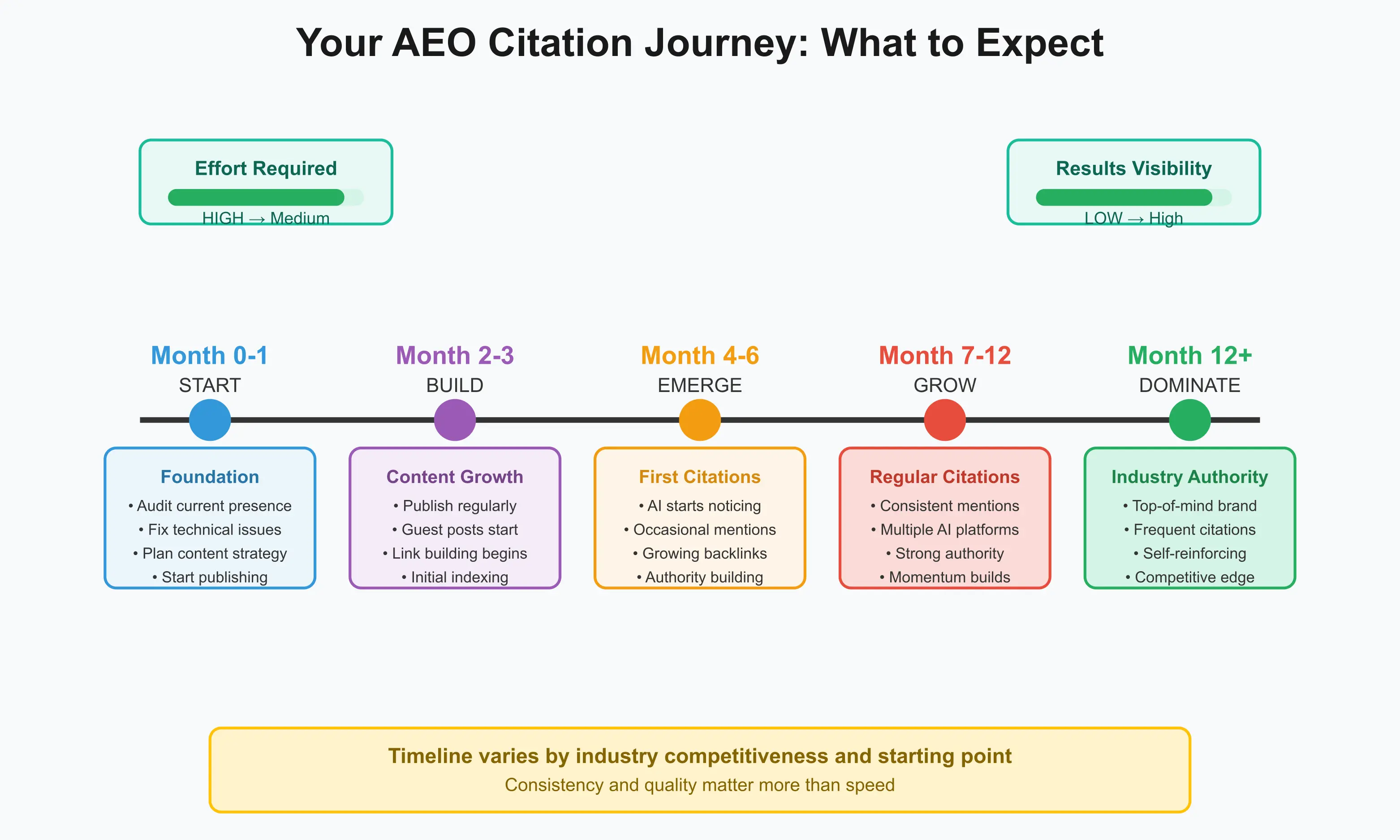
Getting cited in ChatGPT isn't a quick fix. It's the result of consistently building authority over time.
Some brands will appear in AI responses immediately because they're already well-established. Others need months or years of strategic content creation and relationship building.
But here's what makes the effort worthwhile. Once your brand achieves citation momentum, it becomes self-reinforcing. More citations lead to more recognition, which leads to more opportunities for citations.
The brands winning at AI visibility now are those that invested in quality content and genuine expertise years ago. They weren't specifically trying to "optimize for ChatGPT"—they were building real authority.
You can do the same. Start creating valuable content today. Build relationships in your industry. Earn links through quality work. Over time, AI systems will recognize your brand as relevant and authoritative.
The future of search is conversational. People will ask AI systems for recommendations, explanations, and solutions. Your brand needs to be part of those conversations.
Start small. Pick one strategy from this guide. Maybe it's publishing more comprehensive content, or reaching out to industry publications, or improving your site structure. Implement it consistently for three months.
Then add another strategy. Then another. Progress compounds.
The brands that adapt to AI-driven discovery now will have a significant advantage as this technology becomes standard. The question isn't whether AI will change how people find information—it already has. The question is whether your brand will be visible when it matters.
Practical Next Steps
Here's what to do today:
Check if ChatGPT mentions your brand. Ask questions your customers might ask. See what comes up. This baseline tells you where you're starting.
Audit your existing content. Do you have comprehensive guides on your main topics? Are your blog posts answering real questions? Identify gaps.
Look at your backlink profile. Who's linking to you? Are they authoritative sources? Where could you earn better links?
Review your website structure. Are headings clear? Is schema markup implemented? Does your site load quickly?
Plan your content calendar. What topics can you cover comprehensively? What original research can you conduct? Schedule regular publication dates.
Reach out to one industry publication. Pitch a guest article. Build that relationship.
Most importantly, commit to the long term. Building AI visibility isn't a weekend project. It's an ongoing strategy that pays dividends for years.
The brands that succeed in AI-driven search will be those that genuinely deserve to be cited. Focus on building real expertise, creating valuable content, and earning authentic recognition. The citations will follow.
We specialize in getting brands mentioned in ChatGPT, Claude, Perplexity, and other AI systems. Our team handles the strategy, content creation, and relationship building needed to establish your brand as a cited authority.
Here's what we do:
Strategic Content Development - We create comprehensive, citation-worthy content that AI systems recognize as authoritative. No fluff, just substantive guides and resources that demonstrate expertise.
Authority Building - Our team secures placements on high-authority sites in your industry. These mentions and backlinks signal to AI training systems that your brand matters.
Technical Optimization - We implement the schema markup, site structure improvements, and metadata optimization that help AI systems understand and cite your brand correctly.
Ongoing Monitoring - We track your brand's visibility across major AI platforms, test queries regularly, and adjust strategies based on what's working.
Media Relations - Our PR team gets your brand featured in publications that influence AI training data. Real coverage from credible sources, not spam tactics.
The difference? We focus on sustainable, white-hat strategies that build genuine authority. No shortcuts that might work today but harm your reputation tomorrow.
Most brands we work with see their first AI citations within 3-6 months. Some appear faster if they already have a solid foundation.
Want to know where your brand stands now and what it would take to get cited consistently?
Contact Visibella today for a free AEO audit. We'll show you exactly what's keeping your brand invisible to AI systems and map out a plan to fix it.
Will Abraham spent five years building one of the largest PPC and SEO agencies serving real estate investors. After ChatGPT's launch in 2022, he saw the shift from traditional search to AI-driven answers coming and built Visibella to help brands become the answer AI gives, not the link buried underneath it. He stays close to active AEO researchers and the teams shaping how AI search works.